GLP-1s are creating a much broader support challenge than weight management alone. As people move through their treatment journey, they are continually interpreting changes in their appetite, food noise, weight, side effects, confidence and wider health, while considering what those changes mean for what they do next.
Our GLP-1 Experience Study shows why support must evolve with the individual — from redefining progress to navigating maintenance, stopping and restarting.
Support must respond to how people experience:
- starting treatment and forming realistic expectations
- adjusting to changing signals as response unfolds
- redefining what progress actually means to them
- navigating the grey areas between clinical touchpoints
- managing the considerable everyday work of being on treatment

Watch the Webinar: GLP-1 Experience Study — Moments that Matter
Watch the Webinar →Healthcare Europe
Karen Douglas, Commercial Director
kdouglas@buzzback.com
Healthcare US
Jonathan Weiser
Healthcare Practice Lead
jweiser@buzzback.com
About the research
Our GLP-1 Experience Study was based on primary market research with 300 current and former GLP-1 users across the UK, US and Germany, analyses of 100K+ public social posts and discussions, alongside targeted search behaviour. Together, these give us three complementary perspectives on the GLP-1 experience.
What people tell us directly
Primary research with 300 current and former GLP-1 users in the UK, US and Germany, structured around five decision moments.
What they spontaneously share online
Analysis of 100K+ public social posts and discussions, revealing the unfiltered experience people share with each other.
What they actively go looking for
Targeted search behaviour data, showing what people seek out when they have a question or need during their treatment journey.
Five decision moments

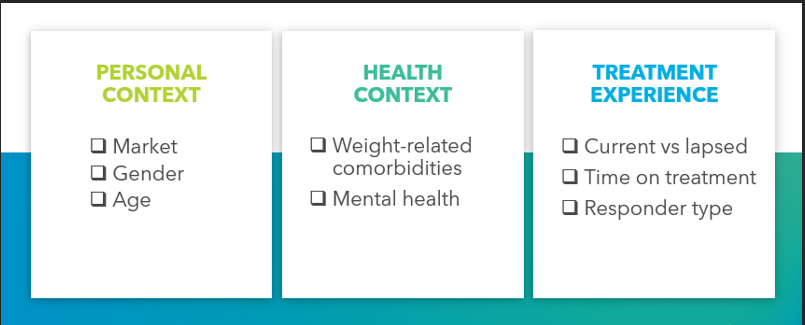
How moments vary across patient profiles
Five support opportunities
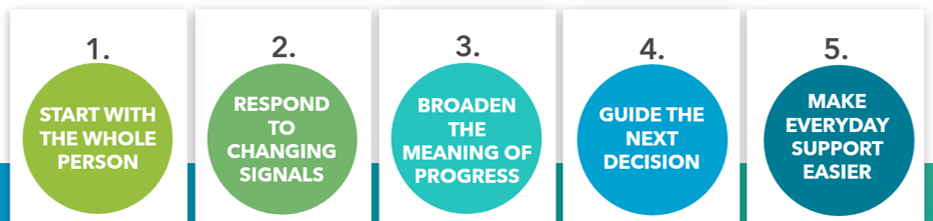
Our findings point to five ways healthcare companies can provide more anticipatory and adaptive support — moving from reactive, one-size-fits-all information to support that recognises where someone is in their journey, what they are experiencing and what they need next.
How healthcare companies can support people at every stage
The challenge is to turn treatment signals into personalised support at the right moment. This requires attention to:
- 1 Starting with the whole person — market, age, gender, wider health, motivations and personal goals all shape starting needs and how people navigate early decisions.
- 2 Responding to changing signals — tailoring support as treatment response evolves, from hyper to moderate, plateaued and limited responder profiles.
- 3 Broadening the meaning of progress — helping people and HCPs develop a shared language around quality of weight loss and the wider outcomes that matter.
- 4 Guiding the next decision — identifying change early, closing gaps between clinical touchpoints and bringing maintenance into the conversation before people reach their goal.
- 5 Making everyday support easier — addressing the considerable everyday work of GLP-1 treatment, from managing nutrition and side effects to navigating changes in identity and relationships with food.
1. Start with the whole person
Market, age, gender, wider health, motivations and personal goals all provide important context to understand starting needs. The same treatment can feel very different depending on where someone begins — and what they are expecting from it.
Market matters too: US GLP-1 users are more clinically anchored, while in Germany people are more likely to rely initially on their own judgement when making treatment decisions.
2. Respond to changing signals
Once someone starts treatment, how they respond can provide a valuable basis for tailoring support. Response type is not a fixed category — it is a dynamic signal that shapes what someone needs at any given moment.
Hyper responders
Experience rapid or substantial improvements and may need help sustaining their progress and managing the intensity of early change.
Moderate responders
See steady but less pronounced improvements and may benefit from support to embed the routines that keep them on track.
Plateaued responders
Whose initial progress has slowed or stopped and may need guidance on adapting their approach or reassessing what success looks like.
Limited responders
Experience little or no meaningful improvement and may need help reassessing whether the treatment is right for them.
Support must continue to evolve as a person's response, confidence and personal circumstances change. What was relevant at week four may be irrelevant — or even counterproductive — at week sixteen.
3. Broaden the meaning of progress
Weight remains an important and highly visible measure of success, but it is not the only way people judge whether treatment is working. Changes in appetite and food noise, greater mobility, better sleep, improved confidence and wider health can all shape someone's experience of progress.
There is an opportunity for healthcare companies to help create a shared lexicon around the quality of weight loss and the wider outcomes that matter, using language that feels relevant to people's lives and supports more meaningful conversations with healthcare professionals.
— buzzback GLP-1 Experience Study
When someone's weight loss slows, improvements in sleep, energy, mobility or food noise may still represent meaningful progress. Without a language for these outcomes — shared by patients, carers and HCPs — those improvements can go unrecognised, increasing the risk that people disengage from treatment before it has delivered its full benefit.
4. Guide the next decision
The grey areas between clinical touchpoints create an important role for healthcare companies. Three distinct opportunities stand out.
Identify change early
Medtech and connected platforms have an important role in identifying change early. A shift in a signal could indicate that someone is plateauing, struggling or beginning to disengage. That signal could trigger relevant support before uncertainty develops into a decision made without credible guidance.
Close the gaps between clinical touchpoints
Companies can make the journey easier to navigate while remaining very clear about which decisions require guidance from a healthcare professional — turning grey areas into moments of structured support rather than points of uncertainty.
Bring maintenance into the conversation earlier
Reaching goal weight does not resolve the treatment decision — it creates a new one. People are considering lower doses, wider intervals, tapering and other approaches. Maintenance needs to become part of the conversation well before someone reaches their goal, with realistic expectations about what it may involve.
A critical transition
People are not simply choosing between staying on treatment forever and stopping completely. They are weighing cost, access, concerns about long-term use and the desire to manage without medication — often without the support they need to make those decisions well.
5. Make everyday support easier
GLP-1 treatment also involves a considerable amount of everyday work. People may be managing nutrition, side effects, sleep, activity and new routines, while adapting to changes in appetite, social situations, identity and their relationship with food.
This creates a significant role for consumer health companies. Practical support could make these everyday aspects of treatment easier and help people sustain routines — turning the burden of self-management into a more supported, navigable experience.
— buzzback GLP-1 Experience Study
The everyday experience of GLP-1 treatment extends far beyond medication adherence. It touches how people eat, socialise, exercise and think about themselves. Companies that understand and address this dimension are better placed to support long-term engagement and sustained outcomes.
buzzback GLP-1 Experience Study
Our study brings together three complementary data sources to build the most complete picture of how people actually experience GLP-1 treatment — not just what they report to their HCP, but what they share with each other and what they go looking for when they need answers.
Our research examined five decision moments across a diverse range of user profiles:
-
Generational differences are striking. 80% of Gen Z expect to continue treatment until reaching their goal weight, compared with 46% of Gen X — yet only 24% of Gen Z consult an HCP first for medication decisions, versus 63% of Gen X.
-
Market shapes decision-making from the start. US GLP-1 users are more clinically anchored in their approach to treatment decisions, while in Germany people are more likely to rely initially on their own judgement — with implications for how and where support should be delivered.
-
Response type determines what support is needed — and when. The same moment in a GLP-1 journey can be experienced very differently depending on whether someone is a hyper, moderate, plateaued or limited responder — calling for support that recognises and responds to these differences.
Get the full findings
Watch the Webinar: GLP-1 Experience Study — Moments that Matter
To request the webinar presentation or arrange a tailored presentation exploring the findings and audience groups most relevant to your organisation, please get in touch with the buzzback healthcare team. We welcome conversations with pharma, medtech and consumer health teams to explore how these findings can inform your support strategy.